
What Factors Increase the Collector Value of a Classic Car?
Published: 09/23/2026
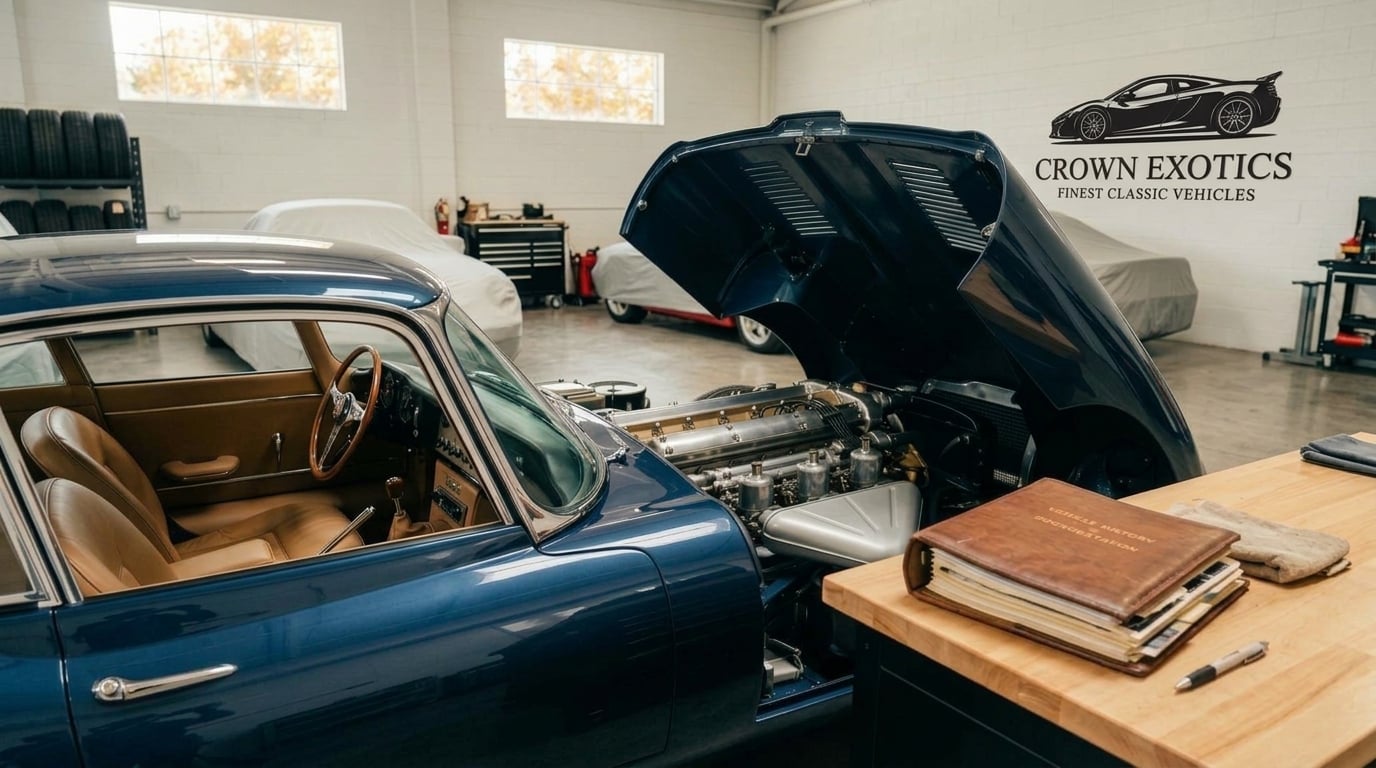
Original factory condition, verified matching numbers across engine and chassis components, low documented mileage, comprehensive ownership provenance, rare factory option packages, and desirable period-correct color combinations drive the highest collector value for a classic car. Vehicles that preserve original assembly integrity while maintaining thorough historical documentation consistently command premium valuation over heavily modified or unverified examples.
When evaluating collector vehicles, physical preservation stands as a primary value driver. Original body panels, factory welds, and undisturbed interior materials establish authentic provenance that cannot be replicated by aftermarket restoration. Engine block stampings matching the chassis VIN confirm mechanical purity, which remains a core requirement for serious investors. Historical documentation, including original bill of sale receipts, maintenance logs, and past registration records, validates historical significance and eliminates uncertainty regarding past ownership or mileage claims. Market analyses from Hagerty indicate that documented provenance and factory-original specifications consistently create substantial value separation between top-tier collector vehicles and broader market averages.
Vehicle options and factory rarity also weigh heavily in collector appraisal. Low production volumes, limited single-model-year production runs, or high-performance mechanical upgrades like factory four-speed manual transmission setups and high-output V8 options raise desirable status among enthusiast buyers. Conversely, aggressive modifications or non-period alterations can reduce valuation by narrowing the potential buyer pool.
Preservation presents distinct considerations near coastal plains where salt-air exposure near coastal bluffs around Ventura, requires climate-controlled indoor storage to protect original sheet metal from frame corrosion. Collectors building a portfolio can consult our specialists at our showroom on King Drive or connect directly by giving our team a quick call to discuss vehicle provenance evaluations.
Table of Contents
- Are Classic Cars Exempt from Smog Testing and Registration Laws in California?
- What Defines an Exotic Car Compared to a Standard Luxury Vehicle?
- How Does Agreed-Value Insurance Differ for Classic and Exotic Cars?
- Which Modern Upgrades Improve Brake Performance and Comfort in Classic Vehicles?
- Common Questions About Owning Classic and Exotic Cars
- Finding Exceptional Classic and Luxury Vehicles at Crown Exotics
Are Classic Cars Exempt from Smog Testing and Registration Laws in California?
California exempts gasoline-powered vehicles manufactured in model year 1975 or earlier from biennial Smog Check requirements. Gasoline vehicles built in model year 1976 or later must pass regular emissions testing, including out-of-state acquisitions brought into the state and private-party ownership transfers for vehicles more than four model years old.
The California Bureau of Automotive Repair enforces testing standards based on vehicle age and engine management architecture. Vehicles from model years 1976 through 1999 undergo BAR-97 tailpipe inspections, which evaluate exhaust emissions under simulated driving conditions using a chassis dynamometer. Vehicles from model year 2000 and newer utilize BAR-OIS testing, which scans the on-board diagnostic system for stored trouble codes and monitor readiness without physical exhaust probe measurements. Out-of-state buyers bringing a classic or exotic vehicle into California should verify emissions equipment completeness before purchase, as initial California registration triggers smog verification for any 1976-or-newer vehicle.
When transferring ownership of a 1976-or-newer vehicle within California, state law requires the seller to provide a valid smog certificate issued within 90 days of sale unless specific family transfer exemptions apply. Collectors considering vintage vehicles can browse our pre-owned vehicle inventory to find pre-1976 smog-exempt classics and fully compliant modern luxury vehicles ready for registration.
| Vehicle Model Year Range | California Smog Test Type | Inspection Method | Transfer Requirement |
|---|---|---|---|
| 1975 and Older (Gasoline) | Exempt | None | No Smog Check Required |
| 1976 – 1999 (Gasoline) | BAR-97 Inspection | Dynamometer & Exhaust Probe | Smog Check Required by Seller |
| 2000 and Newer (Gasoline) | BAR-OIS Inspection | OBD II Port Diagnostic Scan | Smog Check Required by Seller |
What Defines an Exotic Car Compared to a Standard Luxury Vehicle?
An exotic car is defined by low-volume production, specialized track-focused engineering, advanced materials such as a carbon fiber monocoque chassis, and extraordinary engine performance, whereas a standard luxury vehicle emphasizes daily driver comfort, smooth ride quality, quiet cabin insulation, and mass-market production volume.
The architectural differences begin beneath the bodywork. Exotic vehicles feature mid-engine or front-mid-engine layouts to achieve optimal weight distribution and low centers of gravity. Materials like carbon fiber, titanium, and forged aluminum reduce curb weight while increasing structural rigidity for high-speed cornering stability. Performance outputs further delineate subcategories: supercars typically deliver between 500 hp and 800 hp, while hypercars surpass 1,000 hp using twin-turbocharged V12 powertrains or hybrid electric torque vectoring systems. Standard luxury sedans and coupes focus on multi-contour leather seating, air suspension systems, and electronic driver assistance features designed for effortless highway cruising.
Street legality remains a critical factor for exotic car buyers. Legitimate exotic manufacturers engineer vehicles to comply with federal motor vehicle safety standards and California Air Resources Board emissions thresholds, ensuring legal highway registration. Navigating the rolling hills and mountain bypasses surrounding Ventura requires a chassis capable of immediate throttle response and precise steering feedback. Buyers preparing to acquire an exotic machine can submit an online credit application to streamline their acquisition process.
How Does Agreed-Value Insurance Differ for Classic and Exotic Cars?
Agreed-value insurance policies establish a guaranteed vehicle value upfront through mutual agreement between the vehicle owner and insurance provider, guaranteeing full payment of the declared sum in a total loss without applying standard market depreciation.
Standard auto insurance policies calculate total loss payouts based on actual cash value, which deducts depreciation from the vehicle's initial purchase price over time. Because classic and exotic vehicles often appreciate or maintain stable market value based on rarity and condition, actual cash value coverage leaves owners exposed to financial loss. Insurance reporting from Hagerty demonstrates that specialized collector policies protect historical value by waiving depreciation deductions while factoring in restoration expenses, documented provenance, and professional appraisals.
Specialty classic and exotic vehicle policies include specific operational guidelines. Underwriters typically mandate that covered vehicles be stored in locked, enclosed garage facilities when not in use. Policies also establish annual mileage parameters, generally structuring tiers around limited recreational driving rather than daily commuting routes. Owners replacing standard transportation vehicles with classic or exotic automobiles can utilize our trade-in valuation tool to establish current vehicle equity toward their next acquisition.
- Agreed-Value Coverage: Payout amount is set at policy inception and paid in full without depreciation during a total loss claim.
- Actual Cash Value Coverage: Payout is based on replacement cost minus market depreciation at the time of loss.
- Storage Requirements: Agreed-value policies usually require secure, enclosed garage storage.
- Usage Boundaries: Collector policies restrict driving to pleasure use, car shows, and club events rather than routine workplace commutes.
Which Modern Upgrades Improve Brake Performance and Comfort in Classic Vehicles?
Converting original four-wheel drum brakes to a front disc brake conversion equipped with a dual-reservoir master cylinder dramatically improves stopping performance in modern traffic, while installing a hidden aftermarket air conditioning retrofit delivers modern cabin cooling without compromising original interior design.
Classic vehicles manufactured in the mid-twentieth century relied on single-circuit hydraulic drum brake systems. Under repeated heavy stopping or high-speed freeway deceleration, drum brakes build heat rapidly, resulting in severe brake fade and pedal softening. Swapping front drums for vented steel or carbon-ceramic discs provides consistent friction and heat dissipation. Upgrading to a dual-reservoir master cylinder separates front and rear hydraulic lines, ensuring emergency braking power remains active if one circuit loses fluid pressure. Replacing rubber brake hoses with braided stainless steel lines further eliminates pedal expansion under hard braking.
Cabin comfort upgrades make vintage vehicles practical during warm summer drives around Ventura. Retrofit air conditioning kits utilize custom bracketry to mount high-efficiency compressors to vintage engine blocks, routing concealed lines through existing firewall openings. Modern R-134a or R-123yf refrigerant systems deliver rapid cabin cooling while maintaining original dashboard controls or discreet under-dash vents. Owners seeking professional installation of mechanical upgrades can visit our luxury vehicle service facility for certified maintenance and component integration.
Common Questions About Owning Classic and Exotic Cars
Q: What documentation is necessary when importing an exotic car from out of state into California?
Importing an exotic car requires the original out-of-state title, a completed physical VIN verification by an authorized DMV inspector, and proof of California emissions compliance. Vehicles 1976 or newer must pass a California Smog Check before registration, and the vehicle must have a manufacturer emissions label confirming original 50-state certification.
Q: Does converting a classic car's brakes to disc brakes reduce its collector market value?
Reversible safety upgrades like front disc brake conversions generally preserve or enhance market value for drivers who intend to use their vehicles in modern traffic. As long as original components are retained for future buyers, high-quality safety modifications do not negatively impact valuation on non-matching-numbers driver-grade classics.
Q: What engine oil considerations apply to vintage high-performance engines with flat-tappet camshafts?
Vintage engines with flat-tappet camshafts require zinc dialkyldithiophosphate (ZDDP) additives or high-zinc oil formulations to prevent premature camshaft lobe wear. Modern passenger car oils have reduced zinc levels to protect catalytic converters, making dedicated classic car oils essential for vintage engine protection.
Q: How does storage humidity affect stored classic and exotic car preservation over time?
Excess indoor humidity accelerates steel corrosion, causes aluminum oxidation, and promotes mold growth on original leather interiors. Maintaining garage relative humidity between 40 and 50 percent using a dedicated dehumidification system protects metal finishes, preserved wiring harnesses, and sensitive interior upholstery.
Q: Are high-performance exotic car carbon-ceramic brakes suitable for daily street driving?
Carbon-ceramic brakes offer exceptional heat tolerance on racing circuits, but they require minimum operating temperatures to achieve maximum friction coefficient. During cold morning street commutes, carbon-ceramic rotors can feel firm with higher initial pedal effort until the brake pads reach normal operating temperature.
Finding Exceptional Classic and Luxury Vehicles at Crown Exotics
Selecting an authentic classic car or high-performance exotic requires trusted guidance, rigorous vehicle inspection, and clear provenance verification. At Crown Exotics, Classics & Luxury Automobiles, our team specializes in curating hand-selected vintage muscle cars, European classic sports cars, and low-mileage exotic supercars for discerning collectors and automotive enthusiasts.
Every classic and luxury vehicle in our portfolio undergoes a comprehensive mechanical evaluation to verify engine component numbers, structural integrity, electrical system function, and cosmetic condition. Whether you are adding an investment-grade classic to a growing garage portfolio or seeking a high-output exotic for weekend driving along the Pacific coast, our team delivers complete transparency throughout your purchasing journey.
Visit our showroom at our Ventura location to view our current inventory, or speak with a luxury vehicle specialist today by reaching out to us at (805) 291-8281 to schedule a private viewing.
© 2026 Crown Exotics, Classics & Luxury Automobiles. All rights reserved.