
What Should Buyers Check Before Purchasing a Used Exotic Car?
Published: 08/25/2026
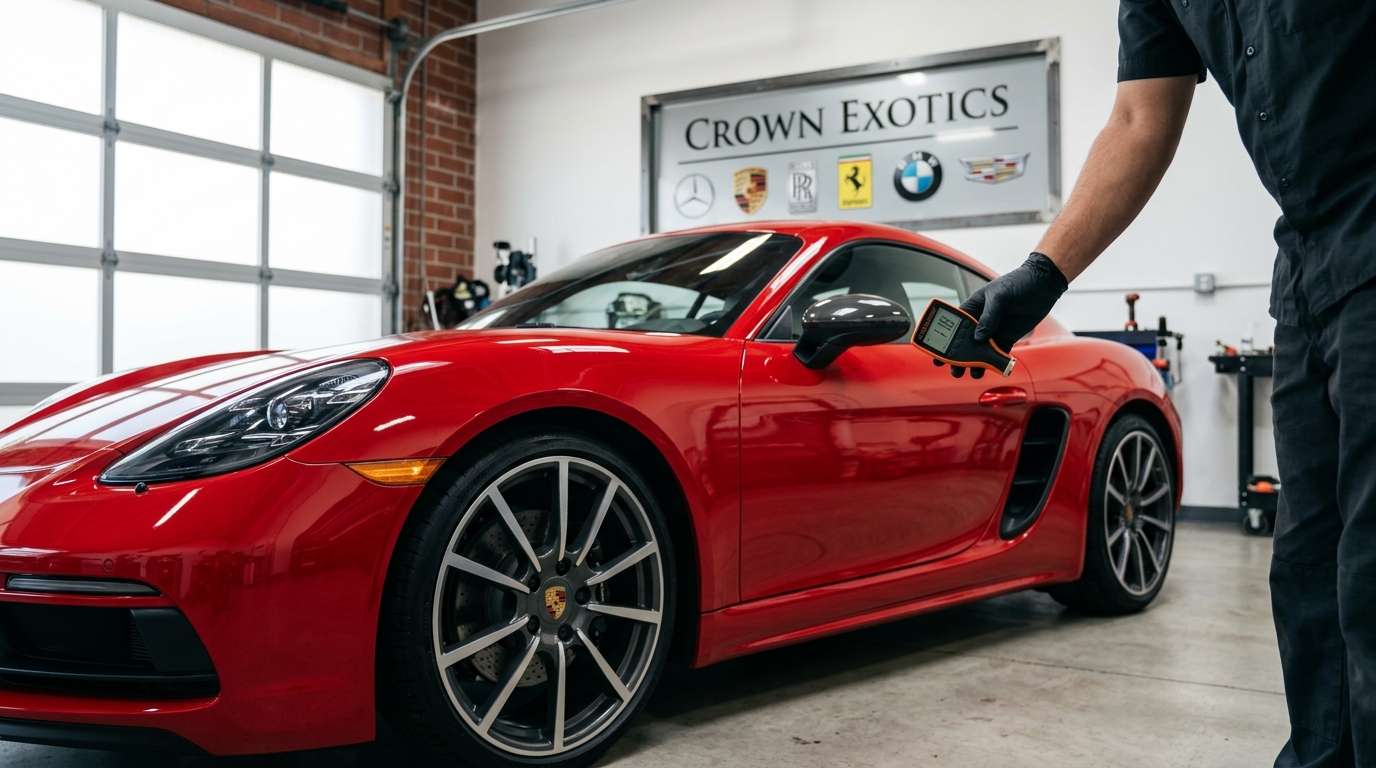
Before buying a used exotic vehicle, you should verify its complete service history, perform a physical paint meter inspection, review the National Motor Vehicle Title Information System report for title brands, and confirm California emissions compliance. Exotic automobiles demand rigorous inspection because hidden body repairs, skipped major service intervals, or undisclosed title brands like a Lemon Law buyback drastically impact safety, performance, and future resale value.
Acquiring a high-performance or rare motorcar requires a structured verification process that differs significantly from purchasing a standard commuter vehicle. Exotic vehicles utilize specialized engineering, including carbon-fiber monocoques, high-strung naturally aspirated or twin-turbocharged engines, and complex dual-clutch transmissions. A missing record for a major service interval—such as a fluid flush, belt replacement, or clutch wear check—can lead to thousands of dollars in unrecorded deferred upkeep. Examining original service stamps, dealer invoice histories, and factory warranty records ensures the chassis has received continuous factory-grade care.
Title compliance is equally vital under California law. Dealerships offering pre-owned luxury and exotic automobiles in California must pull an NMVTIS report for every vehicle and disclose any title brand in writing prior to purchase. If a vehicle has a Lemon Law buyback designation, the manufacturer is legally required to mark the title, attach a warning decal, and provide a signed history of defects and repairs. Furthermore, every pre-owned car displayed for sale must feature the federally mandated Used Car Buyer's Guide, along with required warning stickers if a title brand exists.
When you are ready to evaluate a curated selection of high-line models, our team invites you to visit our Ventura showroom or give our staff a quick call to discuss specific vehicle provenance. If you intend to finance your acquisition, completing an online credit application streamlines the paperwork process before you take a physical walk-around on the lot.
Table of Contents
- Why Is a Paint Meter Test Critical When Evaluating a Pre-Pre-Owned Exotic Car?
- What Qualifies a Vehicle as a Luxury, Exotic, or Classic Car in California?
- Why Are Exotic Supercars Valued Higher Than Standard Luxury Vehicles?
- What Is the Entry Price for a Used Exotic Supercar in Southern California?
- What Is Agreed Value vs Actual Cash Value in Specialty Car Insurance?
- Common Questions About Purchasing Used Exotic and Classic Cars
Why Is a Paint Meter Test Critical When Evaluating a Pre-Pre-Owned Exotic Car?
A digital paint meter test measures paint depth across every body panel to reveal undisclosed accident damage, body filler, or non-factory repainting. Factory paint application on exotic supercars is applied with extreme precision, yielding consistent thickness measurements across metal and composite surfaces.
When an exotic car undergoes body repair following an collision or cosmetic scrape, paint technicians apply primer, base coats, clear coats, or body filler that alter panel thickness. An electronic paint depth gauge measures finish thickness in mils or microns. Readings that spike significantly above factory specifications on a single fender, hood, or door panel indicate aftermarket paintwork. Inconsistent readings across adjacent panels signal panel replacement or body filler beneath the clear coat.
| Panel Condition | Typical Paint Depth | Structural Significance |
|---|---|---|
| Factory Original Finish | 3.5 to 5.5 mils | Preserves full original factory collector value |
| High-Quality Respray | 7.0 to 11.0 mils | Indicates cosmetic refinishing or minor scratch repair |
| Heavy Body Filler / Body Repair | 12.0+ mils | Signals major structural collision repair or metal straightening |
Evaluating panel thickness is a standard step during our trade-in appraisal process because aftermarket resprays directly diminish collector value. First-time supercar buyers in our showroom often ask to see a paint meter reading across front composite splitters and rear quarter panels before taking a test drive. You can explore our current pre-owned exotic inventory online to view detailed vehicle condition reports and verified panel histories.
What Qualifies a Vehicle as a Luxury, Exotic, or Classic Car in California?
In California, a vehicle is classified as a classic based on age, an exotic based on limited production and extreme performance engineering, and a luxury vehicle based on premium materials and advanced comfort technology. Vehicle classification dictates registration requirements, insurance options, and California Smog Check exemptions.
Classic vehicles in California are broadly defined as automobiles manufactured at least 25 years ago. Vehicles built 25 or more years ago qualify for California Historical Vehicle license plates, provided they are maintained primarily for historical exhibition, parades, and collector activities. Under California's Smog Check program, gasoline-powered vehicles from model year 1975 and older are permanently exempt from biennial smog testing. Conversely, gasoline vehicles from model year 1976 and newer—including vintage sports cars and high-performance exotics—must undergo biennial emissions testing upon DMV registration renewal. Newer pre-owned gasoline vehicles under eight model years old are generally exempt from biennial testing but must pay an annual smog abatement fee.
Exotic cars represent limited-production supercars engineered for top-tier velocity, exotic chassis materials like carbon-fiber monocoques, and mid-engine powertrain configurations delivering massive horsepower. Luxury cars focus on refined ride quality, hand-stitched leather cabins, executive rear seating, and quiet sound insulation from marques like Bentley, Rolls-Royce, and Mercedes-Maybach.
Drivers enjoying coastal routes near Ventura often seek vintage convertibles or grand touring coupes that blend oceanfront cruising capabilities with classic styling. Understanding how age and performance dictate California registration status ensures you select a vehicle that aligns with your lifestyle and local regulatory expectations.
Why Are Exotic Supercars Valued Higher Than Standard Luxury Vehicles?
Exotic supercars command higher valuations than standard luxury cars due to limited global production numbers, hand-assembled powertrain components, carbon-fiber chassis construction, and strong long-term collector demand. While mass-production luxury sedans depreciate rapidly as newer technology emerges, exotic supercars retain value due to exclusivity and mechanical heritage.
Standard luxury automobiles are mass-produced on automated assembly lines to supply high global volume. In contrast, exotic manufacturers produce limited runs per model year, often hand-crafting twin-turbo V8, naturally aspirated V10, or V12 engines. Exotic chassis architecture frequently utilizes lightweight carbon-fiber tub construction, forged aluminum double-wishbone suspension systems, and active aerodynamic wings engineered to generate downforce at speed. These specialized materials and race-derived components raise manufacturing costs significantly above standard production vehicles.
Depreciation curves also differentiate the two categories:
- Mass-market luxury sedans and crossover SUVs experience their steepest market value decline during the first 36 to 48 months of ownership.
- Exotic supercars experience slower initial depreciation, with low-mileage, rare-specification models stabilizing or appreciating over time as collector interest matures.
When upgrading from a high-line sport sedan to a mid-engine supercar, evaluating current market value is essential. You can easily value your trade-in through our online portal to see how your current luxury vehicle applies toward an exotic upgrade.
What Is the Entry Price for a Used Exotic Supercar in Southern California?
Entry-level pre-owned exotic supercars in Southern California generally start between $70,000 and $100,000 for early-generation models with higher mileage or complete service histories. High-demand, late-model exotic supercars with low mileage typically command higher figures depending on brand provenance and rare factory options.
The entry price point varies substantially based on mechanical design, transmission type, and vehicle age:
- $70,000 to $100,000 Range: Encompasses mid-2000s exotic supercars, such as early V8 or V10 mid-engine coupes and gated-manual grand tourers with moderate mileage.
- $100,000 to $160,000 Range: Includes late-2000s to mid-2010s exotic sports cars featuring dual-clutch automatic transmissions, carbon-ceramic brake systems, and updated cabin infotainment.
- $160,000 to $250,000+ Range: Captures low-mileage, late-model twin-turbo supercars equipped with advanced driver-assist aerodynamics, telemetry systems, and factory carbon-fiber packages.
Operating costs should be budgeted alongside the purchase price. Exotic vehicles require specialized tires, high-performance fluid changes, and clutch or carbon-ceramic rotor wear monitoring. Purchasing a verified, fully inspected vehicle from a knowledgeable source helps avoid unexpected mechanical reconditioning costs post-sale.
What Is Agreed Value vs Actual Cash Value in Specialty Car Insurance?
Agreed value specialty insurance pays a pre-determined total loss amount agreed upon by the vehicle owner and the insurer when the policy is written, whereas actual cash value insurance calculates payouts by deducting depreciation from market value at the time of loss. Selecting agreed value coverage protects classic, exotic, and luxury car owners against aggressive market depreciation adjustments following an accident or total loss.
Actual Cash Value (ACV) policies are standard across conventional auto insurance policies. Under ACV coverage, the insurance company estimates what the car was worth immediately prior to the accident, factoring in age, mileage, wear, and local market trends. For exotic supercars and classic cars, standard insurer depreciation algorithms often drastically underestimate true market value, leaving owners with a payout that fails to match replacement cost.
Agreed Value coverage eliminates depreciation disputes during a total loss claim:
- Established Valuation: The owner and insurance carrier agree on the exact vehicle value up front, backed by appraisals, market sales data, and vehicle condition documentation.
- No Depreciation Deduction: If a total loss occurs, the insurer pays the exact agreed figure listed on the policy declaration page, minus any chosen deductible.
- Annual Value Reviews: Owners of appreciating exotic or classic vehicles can adjust policy valuations annually to reflect rising market demand.
For collector vehicles driven primarily on weekend pleasure trips or stored in secured garages, agreed value insurance delivers complete financial protection against market volatility.
Common Questions About Purchasing Used Exotic and Classic Cars
Q: How do California smog check requirements affect classic and vintage cars?
Gasoline-powered vehicles manufactured in model year 1975 or earlier are permanently exempt from California biennial Smog Check requirements. Gasoline vehicles from 1976 and newer must pass a biennial emissions inspection for DMV registration renewal, regardless of whether the vehicle is classified as a classic or exotic. Newer pre-owned gasoline vehicles under eight model years old pay a smog abatement fee in lieu of physical inspection during annual renewal.
Q: What paperwork must a California dealer provide when selling a used luxury or exotic car?
California dealers must provide a National Motor Vehicle Title Information System history report and written disclosure of any title brands, including prior Lemon Law buybacks. The vehicle must display the mandatory Used Car Buyer's Guide on the window, accompanied by a red warning sticker if a title brand exists. Buyers purchasing a Lemon Law buyback must sign a formal defect and repair history disclosure prior to closing the sale.
Q: Can I finance a pre-owned classic or exotic vehicle through an auto loan?
Yes, specialty auto financing options exist for pre-owned exotic, classic, and luxury vehicles. While traditional lenders limit loan terms on older vehicles or high purchase amounts, specialized lenders structure loans tailored to collector car values, offering extended terms and competitive fixed rates. Pre-qualifying online simplifies loan approval before selecting your vehicle.
Q: Why is carbon-ceramic brake inspection important on used exotic supercars?
Carbon-ceramic rotors offer exceptional heat resistance and fade-free stopping power, but replacement costs for worn rotors can be substantial. A thorough pre-purchase check evaluates rotor wear, pad thickness, and thermal surface degradation to confirm the braking system has remaining service life.
Q: How does a vehicle history report help identify past Lemon Law buybacks?
A vehicle history report pulls data directly from state motor vehicle registries, insurance databases, and the National Motor Vehicle Title Information System. If a manufacturer repurchased the vehicle due to warranty defects, the report flags the "Lemon Law Buyback" or "Manufacturer Buyback" title brand, ensuring complete transparency before purchase.
Selecting the right pre-owned luxury, classic, or exotic motorcar requires balancing technical inspection, title verification, and market valuation. Whether you are seeking a mid-engine supercar or a classic grand tourer to cruise along the coastline, our team is ready to guide your purchase path. To tour our current showroom inventory in person, find our showroom location or give us a direct call to arrange a personal consultation with our sales team.
Keep Your Vehicle Running Strong
Keep your vehicle performing at its best with our service team:
© 2026 Crown Exotics, Classics & Luxury Automobiles. All rights reserved.